CV economy stays resilient amid inflation
CEBU CITY — Central Visayas economy remains resilient but is under "significant pressure" from high costs, inflation, and skills gaps, the Bangko Sentral ng Pilipinas (BSP) - Cebu Regional Office reported during its latest economic briefing at the 2nd City of Talisay Business Summit and Trade Expo 2026, October 26-28 at Robinsons Galleria, Cebu City.


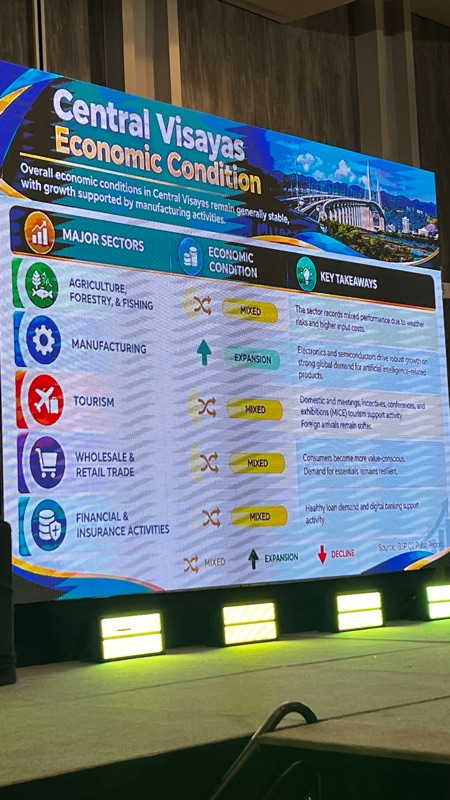
In the Central Visayas Economic Update presented by Dr. Gregorio Baccay III, Bank Officer of BSP-Cebu, the region showed steady activity across manufacturing, tourism, and banking, but businesses are now prioritizing liquidity over expansion as prices bite.
According to the BSP’s Pulso Report, the regional economy is holding up despite rising fuel, electricity, and logistics costs that are squeezing business margins.
"Businesses are navigating rising costs, geopolitical uncertainty, and climate-related risks, yet economic activity remains steady," Baccay said.
Key pressures include a national headline inflation hit 7.2 percent, while Central Visayas peaked at 8.3 percent and 10.7 percent in July 2026, an outlier for the country.
Food inflation alone reached 10.7 percent in Q2; employment is high, but there’s a shortage of specialized talent in cybersecurity, engineering, and digital skills.
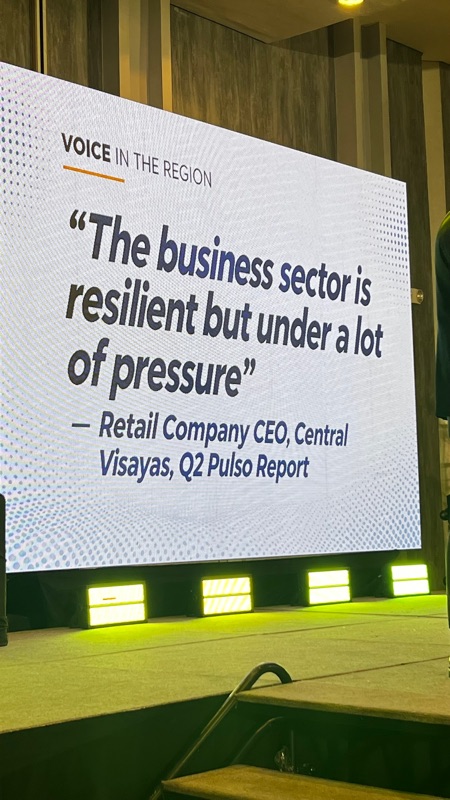
There is cautious spending, both consumers and businesses are prioritizing cash management over expansionary loans, Baccay reported.
Sectoral snapshots: Winners and laggards
Manufacturing leads, driven by global demand for semiconductors and artificial intelligence, electronics manufacturing remains the region’s primary growth engine.
Agriculture struggles. The sector faces an aging farmer population, expensive fertilizers, and poor irrigation. BSP noted this as a main driver of food inflation.
Tourism domestic-driven where visitor activity is being sustained by Filipinos traveling locally, not foreign arrivals.
Retail gets selective as consumers are shifting to essentials and cutting back on discretionary spending, impacting wholesale and retail, BSP added.
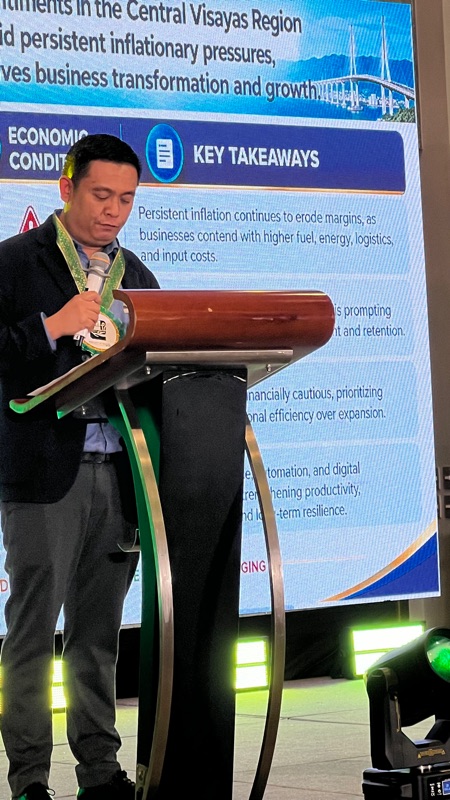
For monetary outlook, expect higher rates until 2028, BSP said that to tame inflation, the Monetary Board raised policy rates to 5.5 percent. BSP projects year-end headline inflation at 6.1 percent, with a target to bring it back to the 2%–4% range by 2028.
"Upside risks remain — Middle East tensions affecting fuel, and El Niño impacting farm yields," Baccay warned. He added that a "whole of government" approach is needed to balance monetary tightening with fiscal measures to fix supply-side issues.
Central Visayas has 788 banking offices, but access remains uneven. Cebu has the bulk, while Bohol has only 132. Talisay City has 27 branches and 44 ATMs.

Yet liquidity isn’t translating to loans. In Talisay, ₱23.98 billion in deposits as of June 30, 2026 yielded only ₱7.86 billion in loans, a 32.78 percent loan-to-deposit ratio.
"This indicates funds are not being fully utilized for business expansion or local investment," Baccay noted.
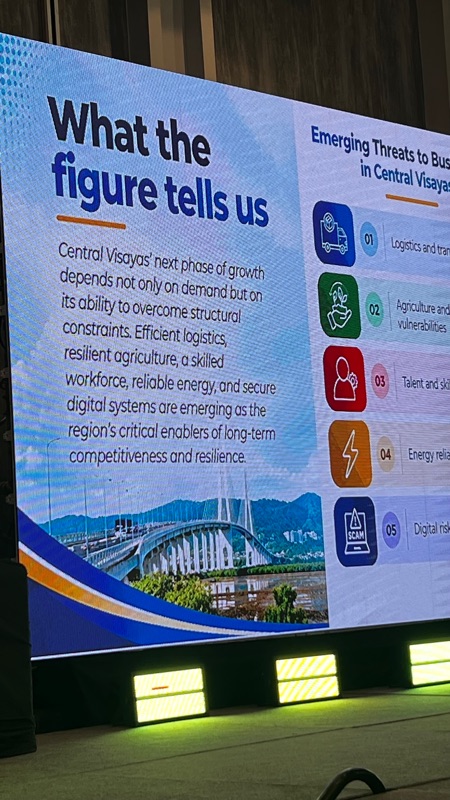
BSP said the "winners" in the next quarter will be firms that control costs and embrace digitalization, automation, and AI to boost productivity.
But threats loom, he added.
Logistics bottlenecks from port congestion and road gaps;
labor migration from farms to construction and BPOs and
digital risks like online fraud and cybersecurity attacks.
"Digitalization is viewed as the primary driver for future growth," Baccay said. "But banks and businesses must also address emerging fraud risks."

For Central Visayas, the outlook is cautious optimism: growth is possible, but only if inflation cools, skills are upgraded, and money in banks moves into productive investments. (Photos: MBCNewman)


