Central Visayas races to beat super El Niño
CEBU CITY— With a “very strong” El Niño forecast to bring dry spells starting December, Central Visayas is rolling out a three-pronged defense—massive food stockpiling, community-level preparedness, and stricter coordination among local governments.

During a regional briefing at the Kapihan sa PIA Wednesday, October 21, officials from the Department of Social Welfare Development (DSWD)-Central Visayas and the Office of Civil Defense (OCD-7) and community leaders outlined measures to protect an estimated 18,000 farmers and vulnerable households across Cebu and Bohol.
According to DSWD-7 Assistant Regional Director for Operations, Jiah Sayson, the DSWD Field Office 7 has prepositioned 101,259 family food packs across the region in anticipation of drought conditions from November to February.
“Over 66,343 packs are already with the local government units (LGUs) while 34,916 remain in our warehouses,” Sayson said and beyond food, stocks also include hygiene kits, kitchen kits, sleeping kits, and clothing kits.
In Cebu, 16 of 53 LGUs have completed stockpiling, about 30 percent coverage with participating towns and cities include Lapu-Lapu City, Toledo, Mandaue, Badian, and Daanbantayan.
In Bohol, 23 of 48 LGUs are on board, or 48 percent coverage, including Talibon, Tubigon, Loon, and Candijay.

To ensure supplies don’t spoil, DSWD launched “Project Susi”, technical inspections of LGU warehouses to guard against infestation and flooding.
While the standard target is to cover 20 percent of an LGU’s population, Sayson said the agency will exceed that if conditions worsen. Priority will be data-driven, with a focus on vulnerable sectors.
Department of Agriculture data shows 4,000 farmers will be directly hit, with projections rising to 18,000. “We will cross-match beneficiary lists to ensure these specific individuals receive priority aid,” Sayson added.
Regional Task Force activated
The Regional Disaster Risk and Rescue Management Council (RDRRMC) has convened its El Niño Task Force to monitor five key sectors: water security, food security, health, public safety, and energy.
“We passed a resolution urging all LGUs to establish or activate their own local El Niño task forces and submit preparedness measures,” said Jane Rose Abapo, Information Officer of OCD-7 at the Kapihan today.

A major challenge, she noted, is public reaction. “Some are complacent, others are panicking. We need large-scale information campaigns with accurate data from PAGASA, DSWD, OCD, and PIA.”
Communities prepare at Barangay level, Abapo saud, adding that at the grassroots, preparation is shifting to households. Through Family Development Sessions, communities are being taught rainwater collection, water conservation, and planting drought-resistant crops like onion, chili, eggplant, and okra.
Officials also confirmed thousands of water filtration kits are stored at the DSWD-7 warehouse, with more arriving. Distribution will include training to ensure proper use.
Under the Sustainable Livelihood Program, micro-enterprises are being encouraged to diversify like selling bottled water, flashlights, and batteries, while livestock owners are advised to manage assets before water scarcity peaks in January and February.
“Preparation begins with families,” stressed community facilitators. LGUs, through City/Municipal Action Teams and convergence meetings led by mayors, are integrating these into barangay contingency plans.
Officials expect dry conditions in December, dry spells in January-February, and possible drought by March.
The message from both DSWD and OCD is the same: stockpiles and machines help, but resilience will depend on communities knowing the risks, sharing accurate information, and helping neighbors before the crisis escalates.

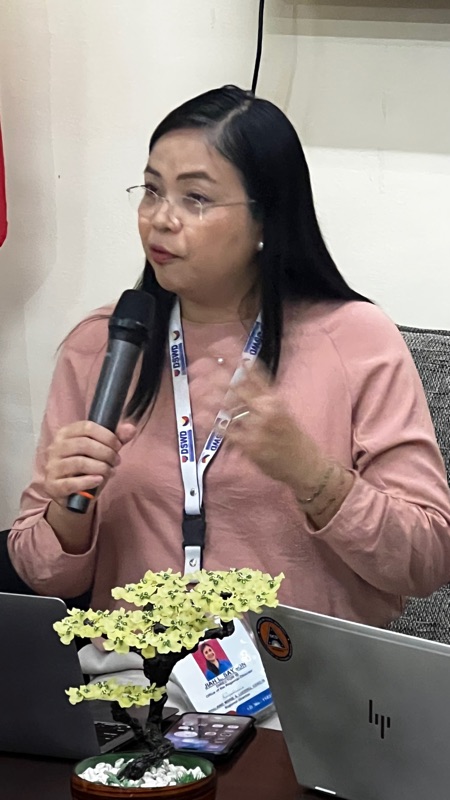
“As we always say, preparedness is the key to building a resilient community,” Sayson said. (Photos: MBCNewman)


